Solutions
Four solutions are summarized for different scenarios: defect treatment of hydropower engineering, defect treatment of high-speed rail transit engineering, defect treatment of water resource environment engineering, and defect treatment of new energy power generation engineering
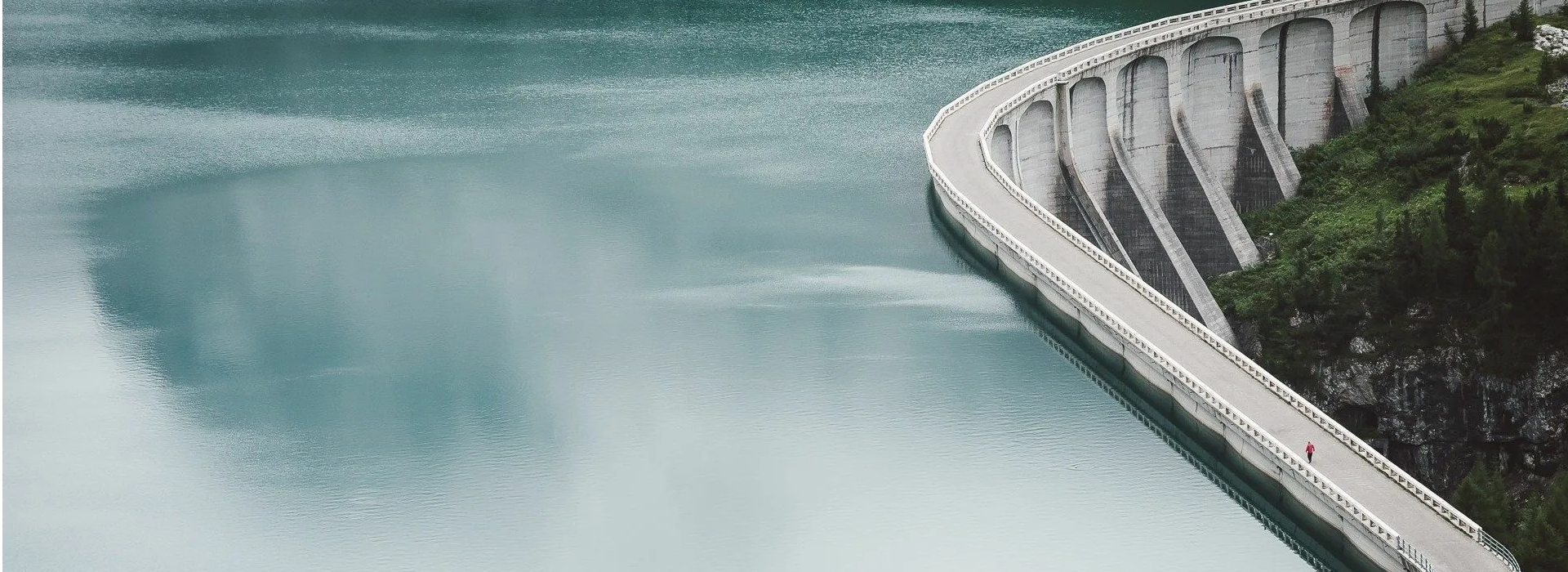
Dam horizontal seam water leakage treatment solution
- Possible causes of leakage:
Partial damage to the two waterproof strips in the dam body's horizontal seams caused the waterproof strips to fail and leak;
The concrete around the two waterproof strips was not compacted tightly, resulting in leakage;
Concrete freeze-thawing occurred between dam sections during dam construction, resulting in leakage after water storage;
Failure of the asphalt well melting electrode caused the horizontal seam waterproof strip to fail (older dams built earlier);
- Common processing methods:
1. Oblique Seam Drilling and Chemical Grouting: For leaking areas accessible via corridors, etc., sealing is achieved by grouting. Angled holes (upward or downward) are drilled along the horizontal seams at different elevations, and water-stopping materials are injected to achieve water-stopping purposes.
2. Chemical Grouting Across Seams (Recommended): Downward holes are drilled from the dam crest across the horizontal seams. Existing seam sealing measures are used to reduce water flow velocity. Rapid-setting, elastic chemical materials are injected into the holes across the seams to form a water-stopping seal.
3. Chemical Grouting and Patching on the Upstream Face of Horizontal Seams: Underwater construction techniques are used to perform chemical grouting along horizontal seams on the upstream face. Watertight modules are then adhered to the seams underwater to achieve water-stopping effect.
4. Asphalt Grouting Pile Water Stop: Using an external heat source to heat and melt asphalt, which is then injected into asphalt wells to achieve water-stopping purposes.
- Crack injection grouting method (recommended) material requirements:
Expandable to ensure that the sealant is tightly sealed;
Able to adapt to the repeated opening and closing deformation of horizontal seams, with certain elasticity and flexibility;
Able to solidify quickly in water to ensure that it is not eroded and carried away by seepage;
The anti-seepage performance of the consolidated body meets the design requirements and is greater than that of the original concrete;
Long-lasting durability and strong environmental adaptability

Please fill in your contact information, and we will contact you as soon as possible
Copyright © Hangzhou Every Step Materials Technology Co., Ltd.
Technical Support:China Enterprise PowerHangzhou|SEO